Warsaw Security Forum 2025 — Unity Tested, Security Debated
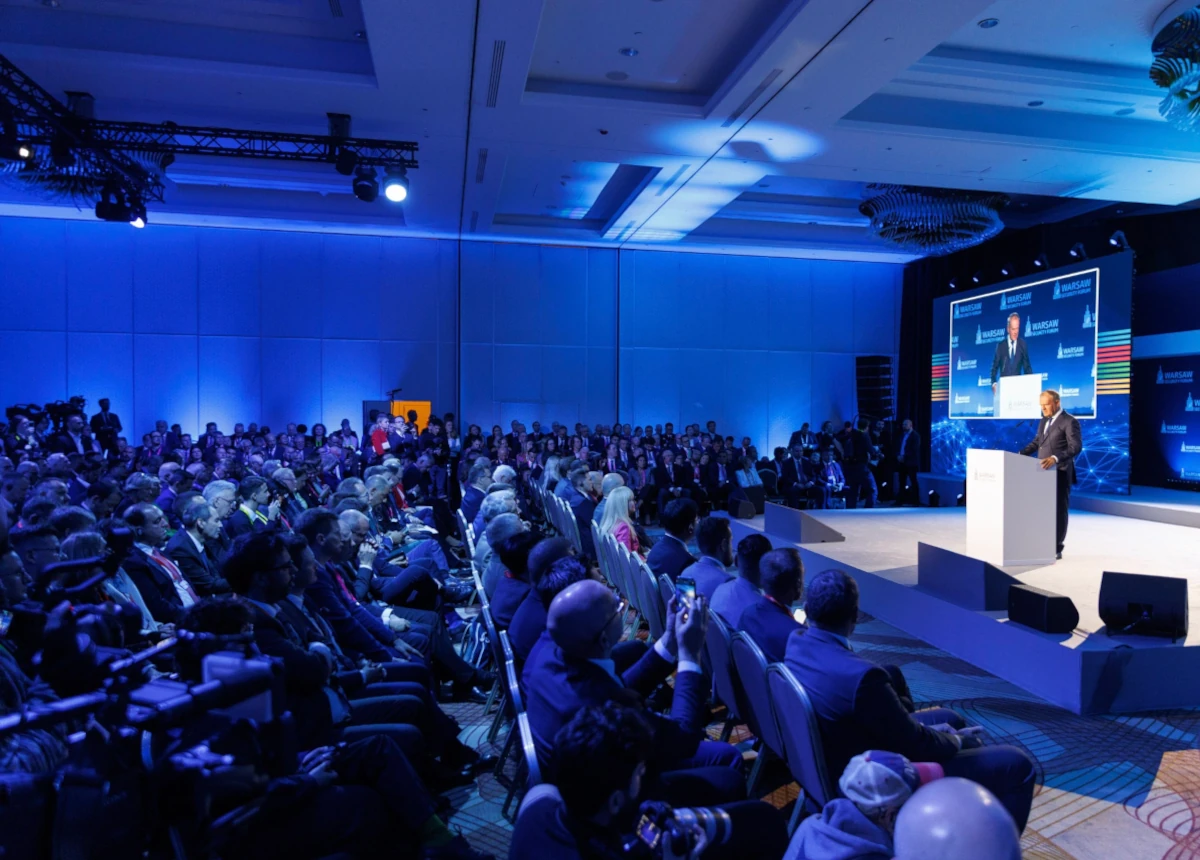
The 12th edition of the Warsaw Security Forum (#WSF2025) was held on 29–30 September 2025, bringing together over 3,000 delegates at a decisive moment for the future of European and global security.
Against the backdrop of Russia’s ongoing military and hybrid aggression, Europe faced a critical question: how to preserve unity and sustain the engagement of its allies, including the United States. The discussions were marked by a sense of urgency, reflected in one of the Forum’s major themes: Divided We Fall.
Calls for Unity: Tusk, Zelensky and World Leaders
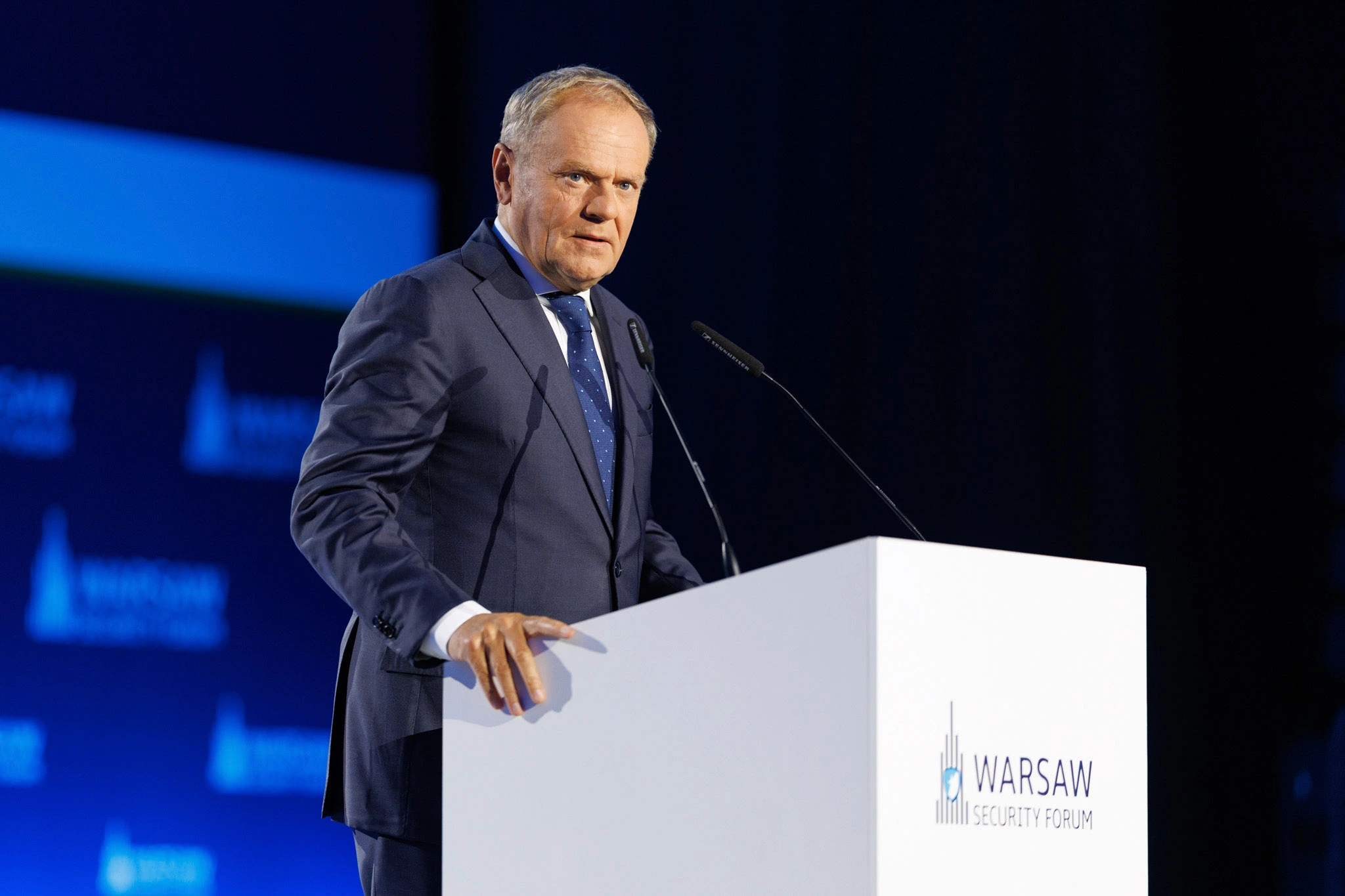
The Forum opened with Prime Minister of Poland Donald Tusk, who emphasized the shared responsibility in confronting Russian aggression.
Donald Tusk
Prime Minister, Poland
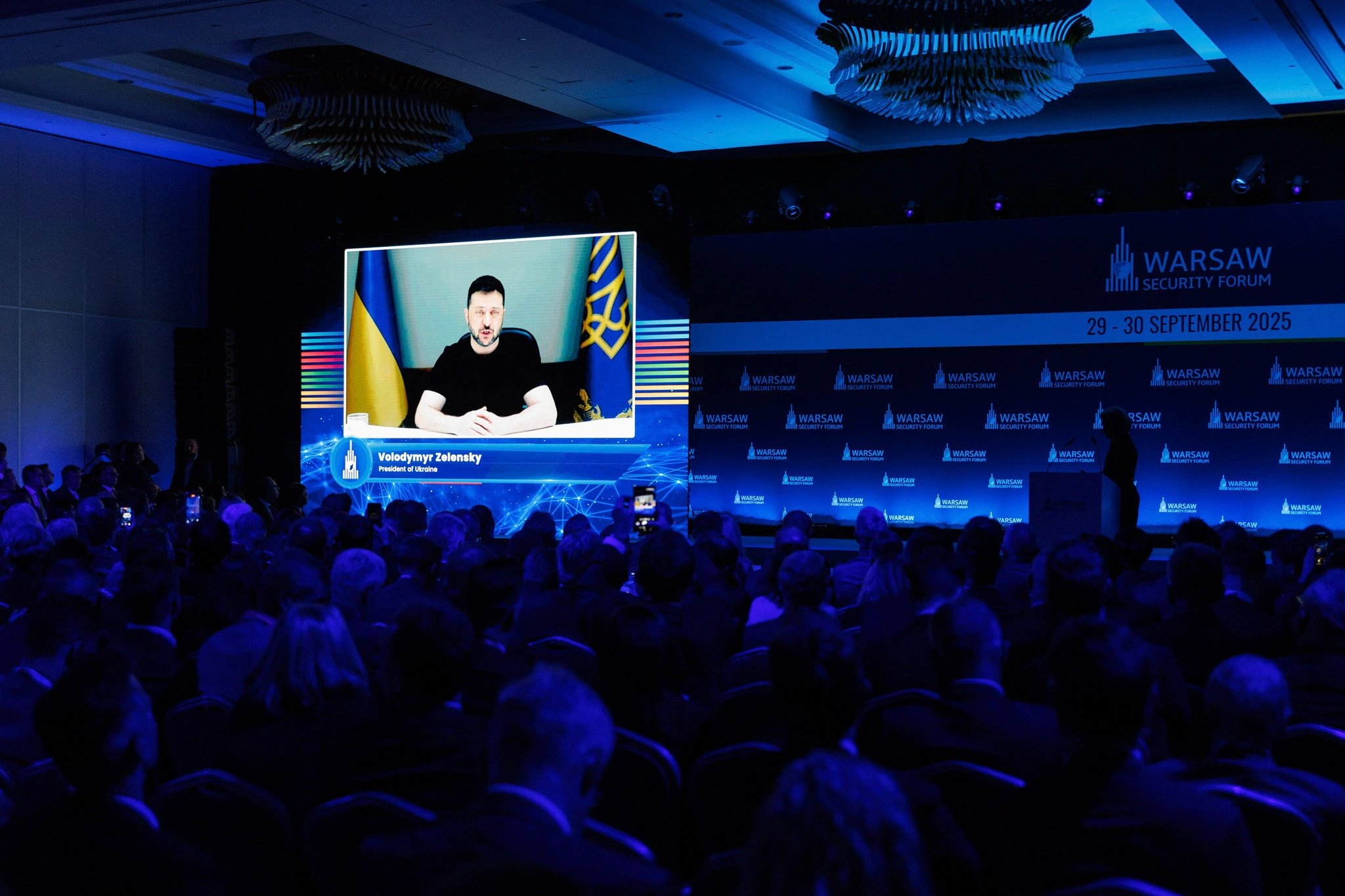
Speaking remotely, President of Ukraine Volodymyr Zelensky stressed the interdependence of European security.
Volodymyr Zelensky
President of Ukraine
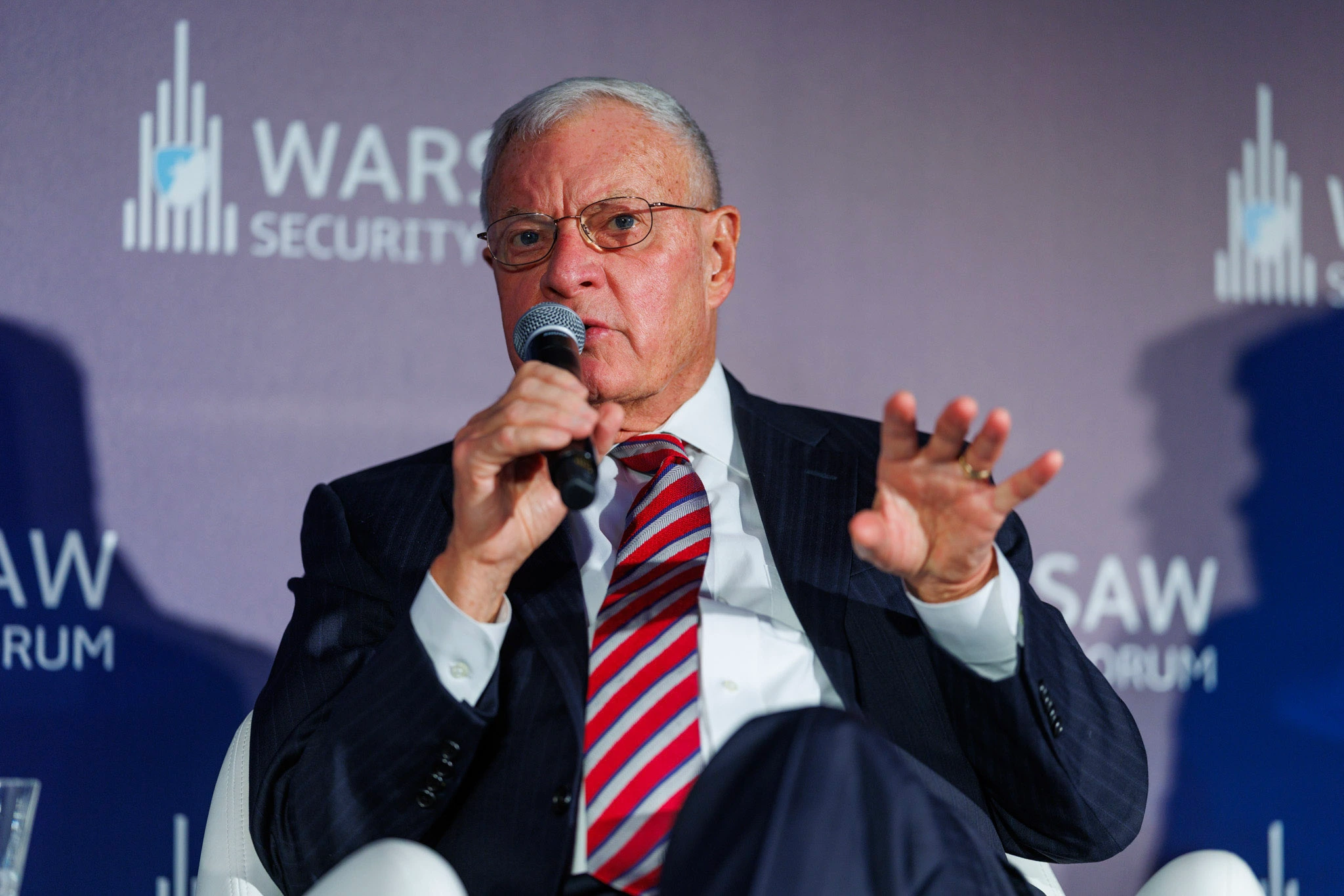
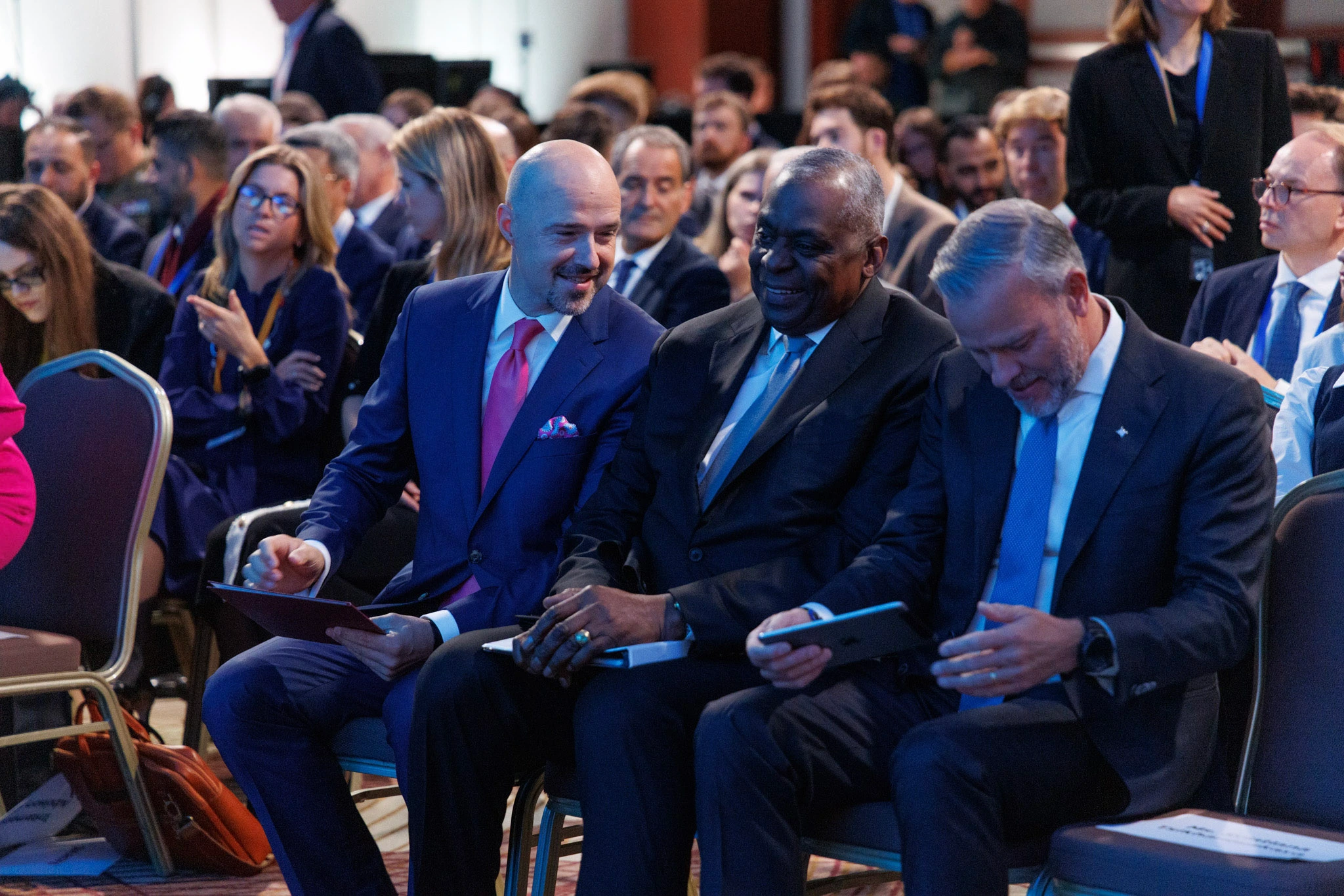
The Forum highlighted a strong American presence, including General Keith Kellogg, Assistant to the President Donald Trump and Special Presidential Envoy for Ukraine, and former Secretary of Defense Lloyd Austin. Kellogg emphasized that NATO countries must take greater risks against Russian provocations, adding that he had never seen NATO as strong as it is today.
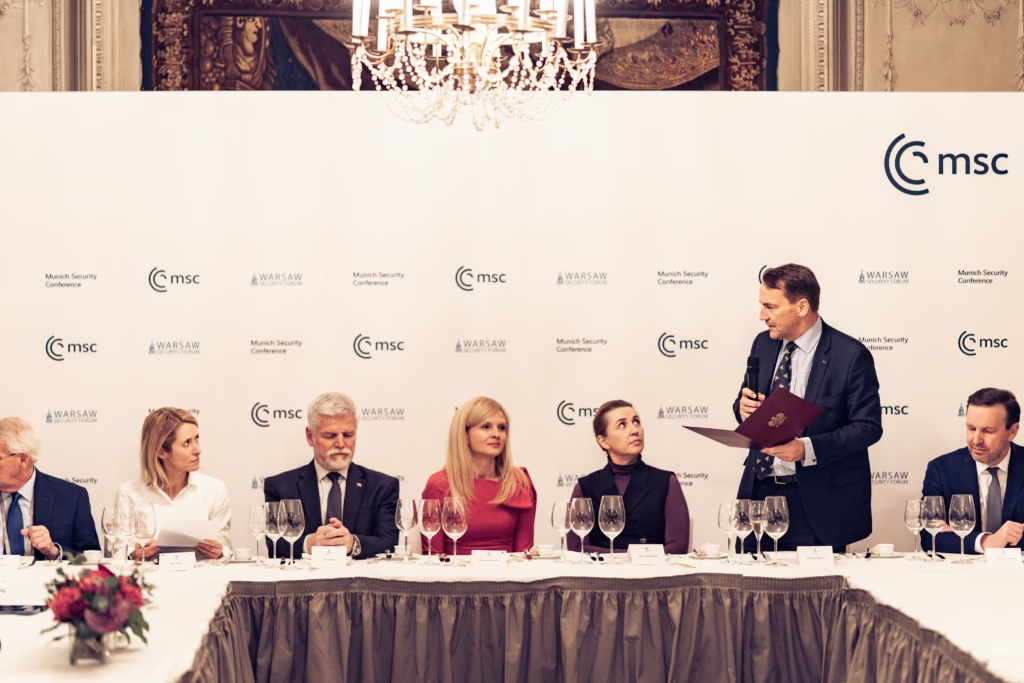
A panel featuring Radosław Sikorski, Polish Foreign Minister, Andrii Sybiha, Ukrainian Foreign Minister, Jean-Noël Barrot, French Foreign Minister, and Johann Wadephul, German Foreign Minister, further explored coordination among the Weimar Triangle countries and Ukraine.
Knight of Freedom Award: Jens Stoltenberg
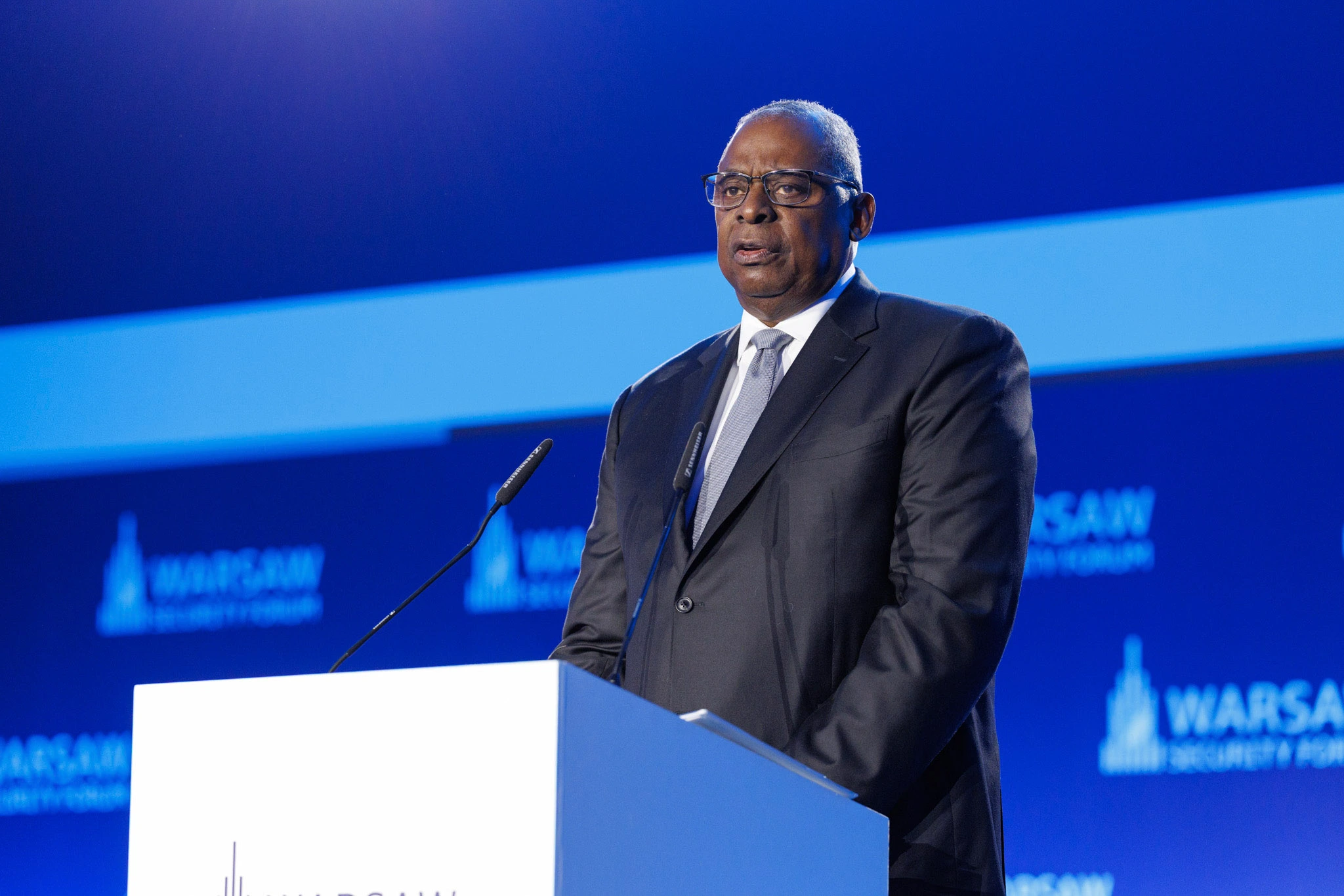
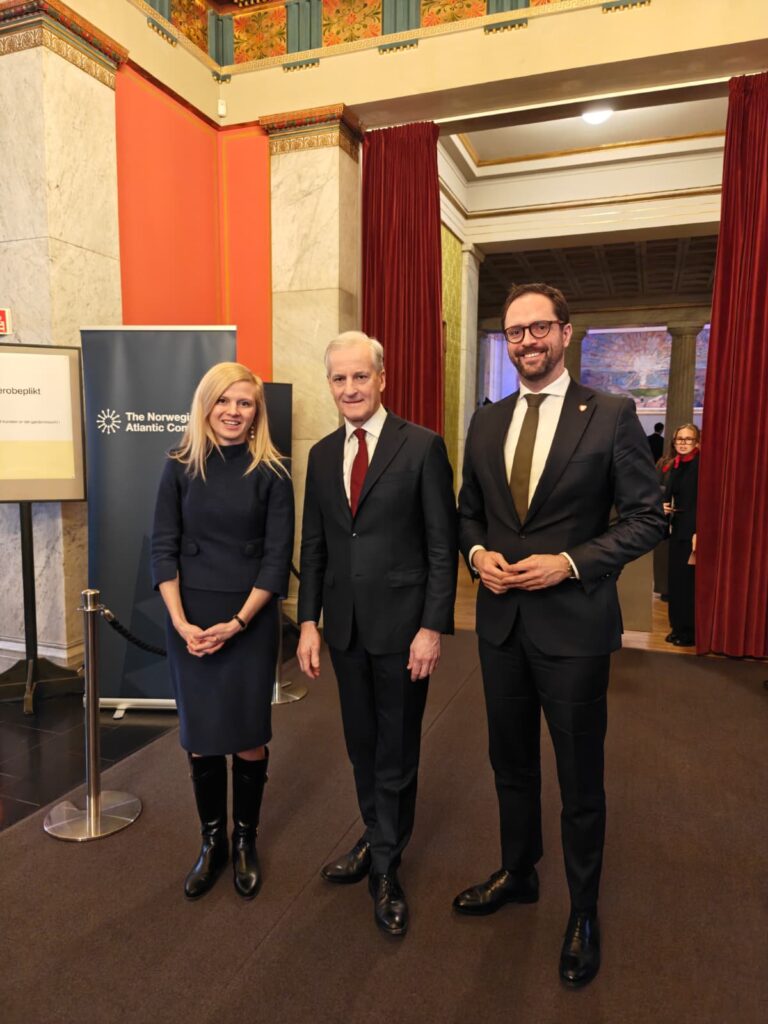
The guest of honor, Jens Stoltenberg, Minister of Finance of Norway, former NATO Secretary General and former Prime Minister of Norway, received the Knight of Freedom Award for his outstanding contributions to strengthening NATO’s eastern flank and opposing Russian aggression in Ukraine. Laudations were delivered by Admiral Rob Bauer, former Chair of the NATO Military Committee, and former Secretary of Defense Lloyd Austin.
Lloyd Austin
Secretary of Defense (2021-2025), United States
Europe Responds: Security, Sanctions, and Support for Ukraine
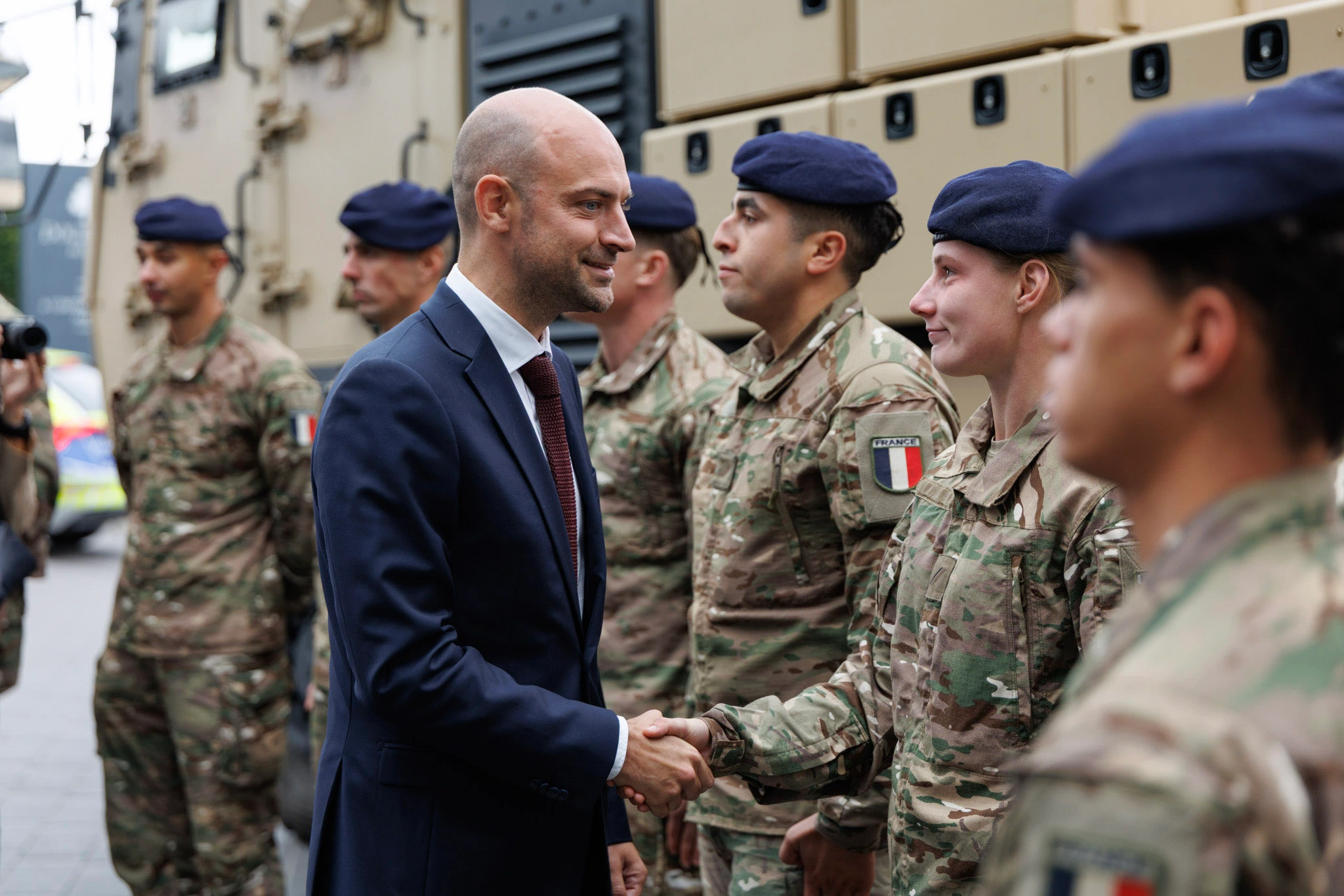
Throughout the Forum, ministers and senior officials discussed how to translate calls for unity into concrete policy. In a bilateral meeting, Ukrainian Foreign Minister Andrii Sybiha and his French counterpart Jean-Noël Barrot explored tougher sanctions against Russia, the use of frozen Russian assets to support Ukraine, and new forms of military cooperation, such as co-producing drones.
Barrot noted that Russia’s war effort was faltering on all fronts.
Jean-Noël Barrot
Minister for Europe and Foreign Affairs, France
German Defense Minister Boris Pistorius announced that Germany, with support from Norway, would deliver two additional Patriot missile defense systems to Ukraine by the end of the year.
NATO and Regional Security
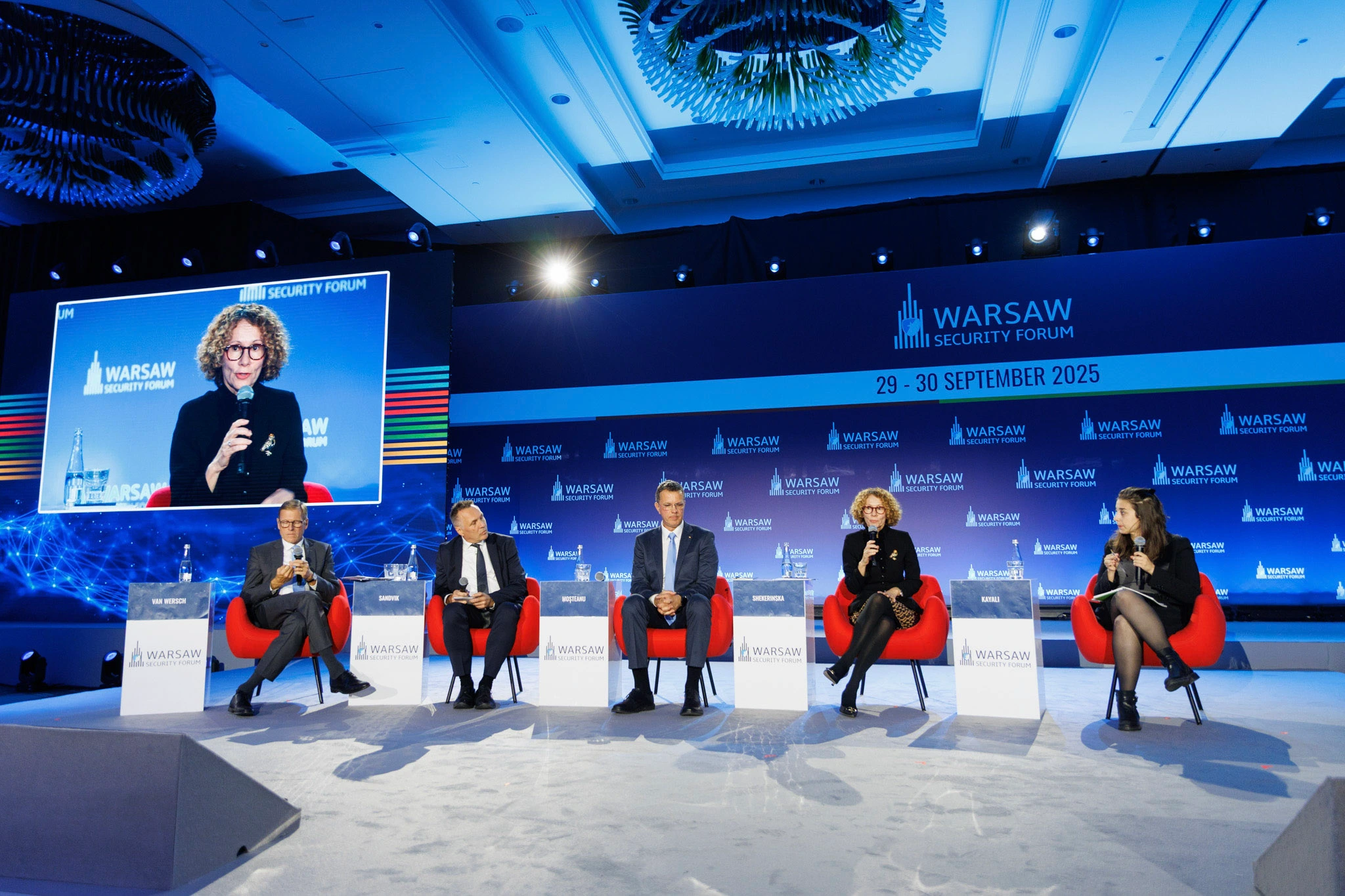
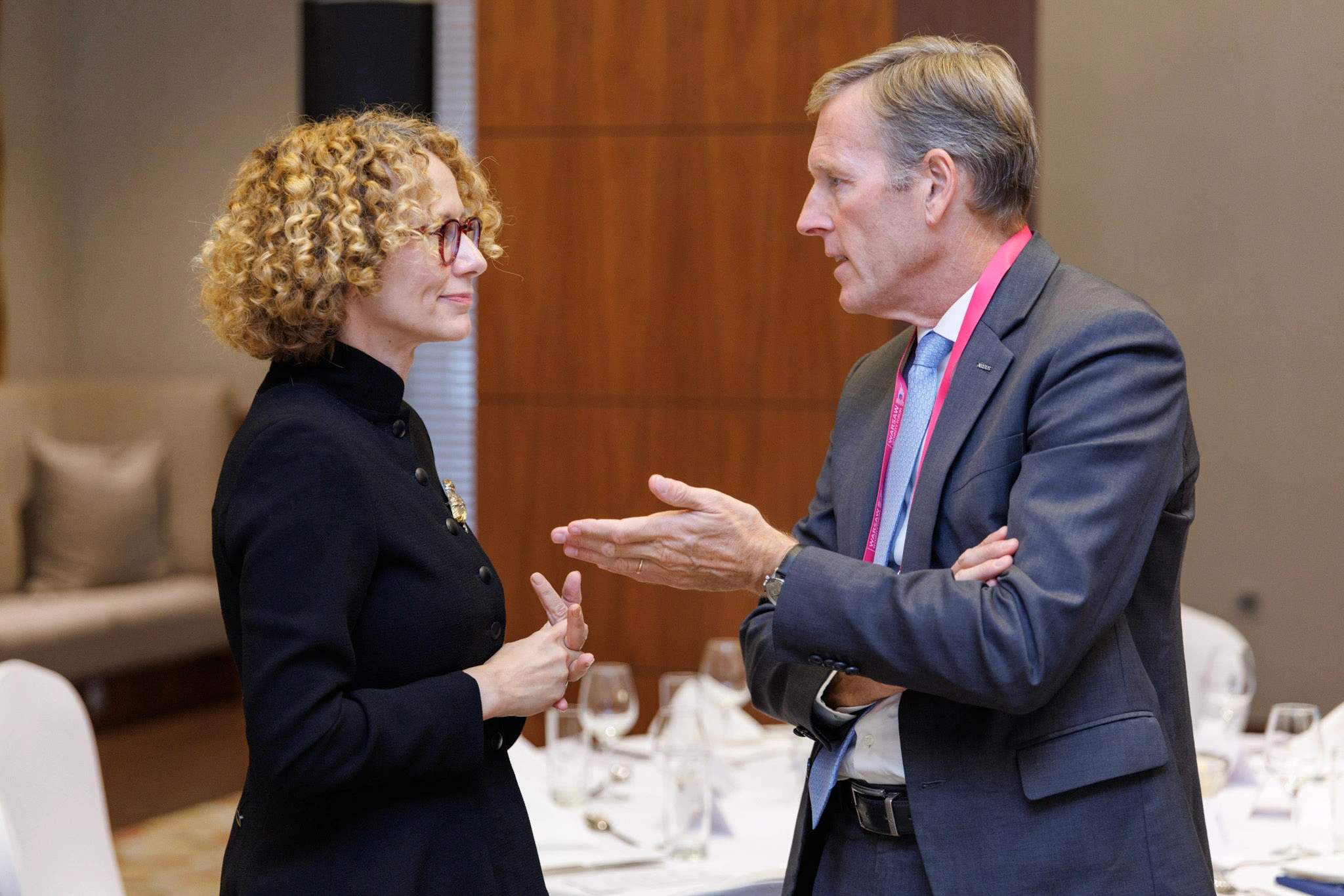
NATO Deputy Secretary General Radmila Shekerinska reaffirmed NATO’s commitment to defending its eastern flank. She highlighted Operation Eastern Sentry, launched in response to Russia’s repeated violations of NATO airspace, describing it as proof of the Alliance’s determination to remain “more flexible and yet stronger, wherever and whenever we are needed.”
Swedish Civil Defense Minister Carl-Oskar Bohlin underscored the risks to critical infrastructure in the Baltic Sea, describing the situation as a reflection of the “dire security situation” Europe now finds itself in.
A Forum of Substance
From Tusk and Zelensky’s calls for unity to concrete commitments on sanctions, military aid, and regional cooperation, the Warsaw Security Forum 2025 underscored both the challenges and the determination of Europe and its allies to confront them together.
The message from Warsaw was clear: Europe’s security will depend on resilience, solidarity, and the willingness to act decisively before it is too late.
We sincerely thank all participants, speakers, partners and media for their engagement this year and look forward to welcoming everyone again at #WSF2026.