Report 2026

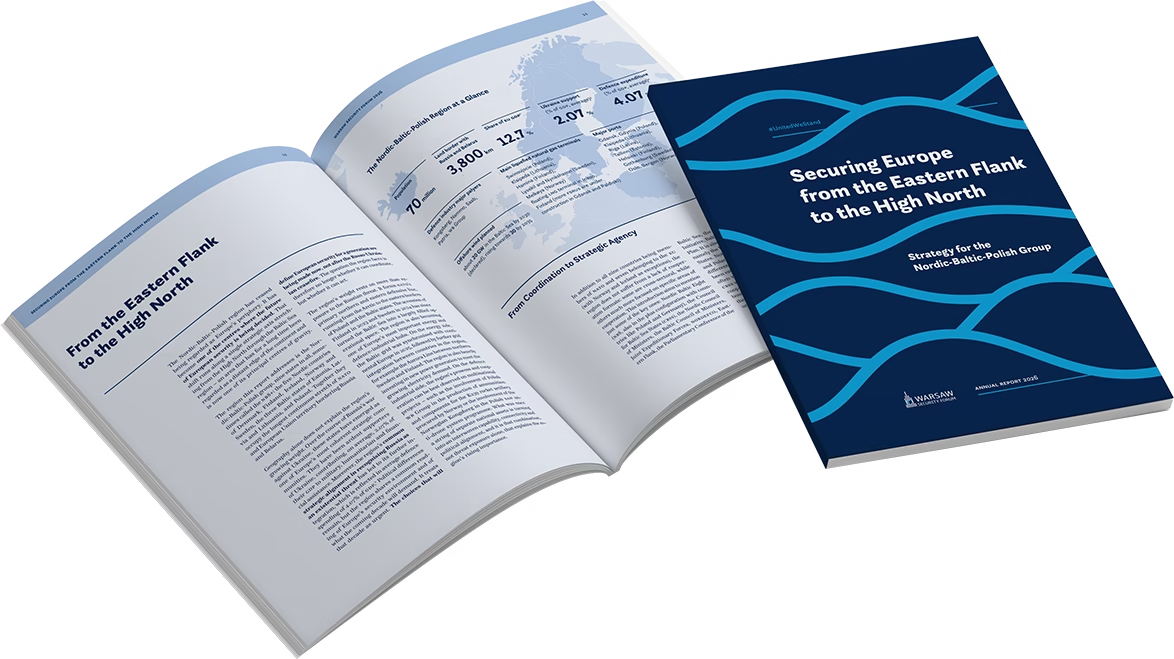
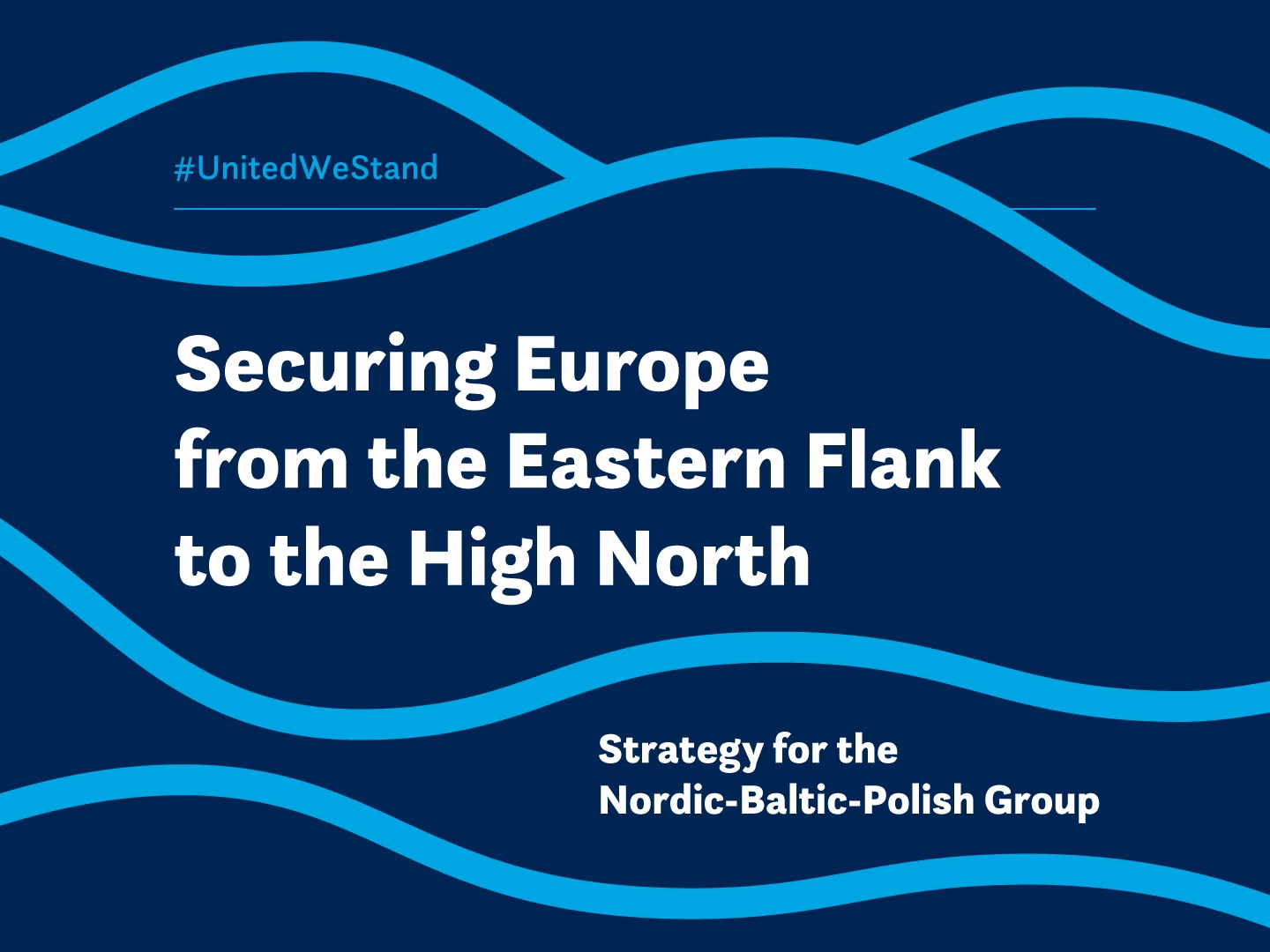
The 2026 edition of the Warsaw Security Forum Annual Report, titled “Securing Europe from the Eastern Flank to the High North: The Role of the Nordic, Baltic and Polish Group,” focuses on a region that has rapidly emerged as the strategic frontier of European security.

Home
|
|
Report

About the WSF 2026 Report

As Russia’s war against Ukraine continues and the United States recalibrates its global posture, the nine countries of NATO’s northeastern flank – Poland, Lithuania, Latvia, Estonia, Finland, Sweden, Norway, Iceland, and Denmark – are increasingly serving as a cornerstone of the transatlantic alliance.

The WSF2026 Annual Report – structured around three core domains – foreign policy, defence, and energy and resilience – will argue that regional cooperation must evolve from declarations into concrete deliverables. Developed with the contributions of leading policymakers and opinion-shapers from across the Nordic and Baltic states and Poland, it will place sustained support for Ukraine and a clear, consistent posture toward Russia at the center of the European agenda, while also addressing the need for credible conventional deterrence.

The analysis will highlight how Europe’s security is increasingly shaped along the axis stretching from the High North through the Baltic Sea to the Eastern Flank—an area where this group combines political resolve with growing operational capacity to underpin collective defence.

The Weimar Triangle initiative, which had been overlooked for years, has recently seen a resurgence of interest in Warsaw, Paris, and Berlin. As representatives of three significant, yet diverse EU members align on the most pressing issues, they could serve as a model for others, helping to advance much-needed reforms within the EU. The goal is not to impose a direction, but rather to demonstrate a cooperative approach that could inspire broader consensus across the EU.

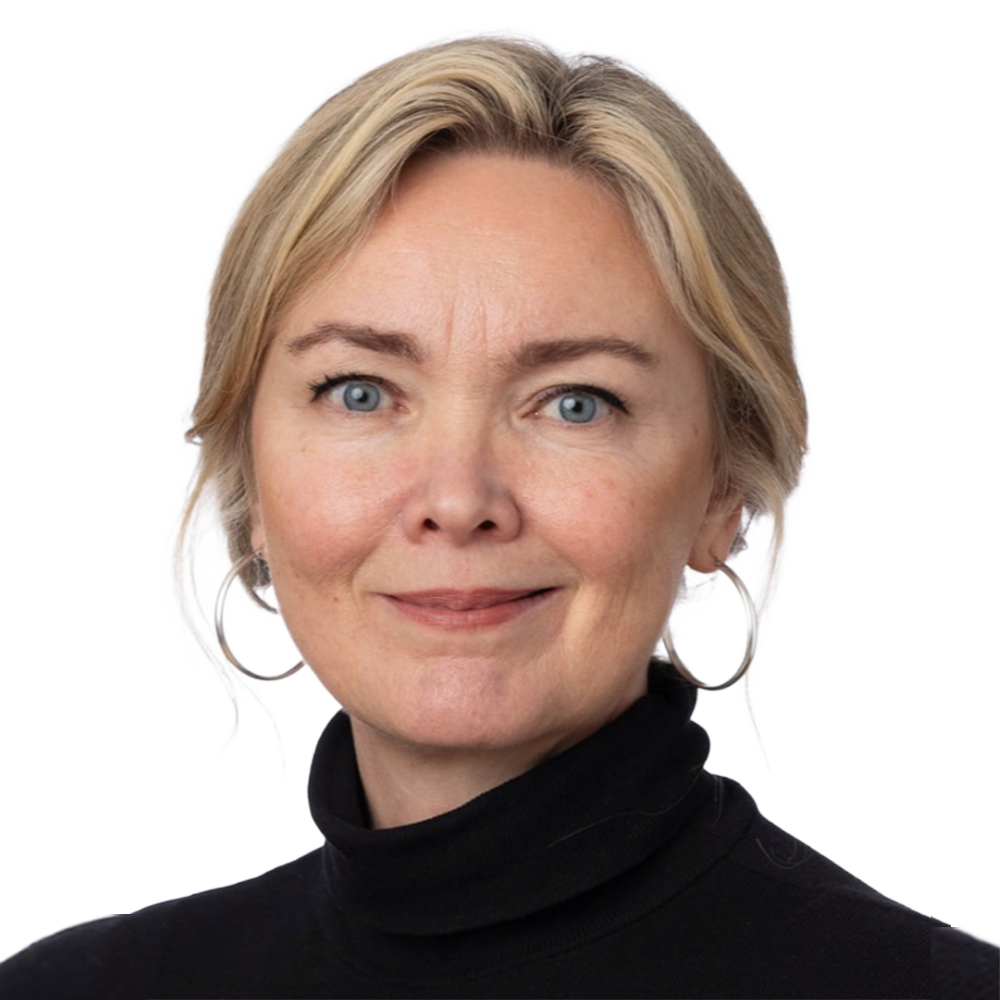
Katarzyna Pisarska, Chair of the Warsaw Security Forum

As the WSF program takes a closer look at the future of the EU under the theme #ThinkingEuropeAnew, the 2024 report aims to shape the debate on the cooperation opportunities within the Weimar Triangle format for a renewed European project. Hence, the title: “Pushing the EU agenda forward with the Weimar Triangle”.

The main part of the report is divided into three thematic areas: Foreign Policy, Defence, and Energy & State Resilience. Each area identifies two key advocacy causes for initiatives that could mobilise cross-party support and form the basis for more unified policies in areas where the EU currently lacks capacity and needs stronger agency. As a final recommendation, the report proposes creating an International Weimar Fund, which would galvanise cooperation between the three states and ensure long-term sustainability of the project.

The report is a result of the work of over 25 French, German, and Polish members of parliament and experts, with support from the Casimir Pulaski Foundation team.

The Report was officially presented to Ministers for European Affairs of the Weimar Triangle — Adam Szłapka of Poland, Anna Lührmann of Germany, and Benjamin Haddad of France — during their sideline meeting at the Warsaw Security Forum on October 2nd, 2024.

List of Contributors

Authors — Defense Group

Authors — Energy and Climate Group

Download WSF 2026 Report

#ThinkingEuropeAnew

The report aims to shape the debate on the cooperation opportunities within the Weimar Triangle format for a renewed European project. It highlights initiatives that could gain cross-party support and help unify EU policies in areas where greater capacity and agency are needed.

Other Reports

Winning the War Before the War: A Blueprint for Europe

Pushing the EU agenda forward with the Weimar Triangle

Central and Eastern Europe as a New Center of Gravity

Frequently Asked Questions

The WSF Report is both aspirational and recommendation-driven. In addition to outlining specific challenges and topics, it aims to propose practical solutions and a feasible roadmap for achieving them. Each edition presents advocacy causes — concrete calls to action directed at policymakers, legislators, and opinion leaders.

The topic of the Report changes each year but is always aligned with the umbrella message of the conference. Rather than offering a broad overview of global trends, the Report focuses on targeted, actionable policies that can realistically be implemented and contribute meaningfully to regional and international security.

The Report is drafted by the Casimir Pulaski Foundation team in close cooperation with high-level working groups. These groups consist of members of parliaments, think tank representatives, military experts, and policymakers. Their input helps shape the content, and many later serve as signatories of the final Report.

The Report is typically released one week prior to the Warsaw Security Forum, which takes place in late September. It is distributed on-site during the event and also made available on the official website.

The Warsaw Security Forum is not only a space for dialogue but also a platform that contributes new ideas and shapes the debate on international security. The Report forms part of the Casimir Pulaski Foundation’s broader advocacy efforts, and its key messages are carried forward throughout the year via meetings, delegations, and strategic outreach across the transatlantic community.

Absolutely. If you have any suggestions or comments related to the WSF Report, please email: mdachowski@pulaski.pl.